PhD level and up are notorious for over specialisation.
My university had a personal assistant, dedicated to 2 professors. Half their job was to make sure they made it to lectures on time. They still managed to be late sometimes.
PhD level and up are notorious for over specialisation.
My university had a personal assistant, dedicated to 2 professors. Half their job was to make sure they made it to lectures on time. They still managed to be late sometimes.


This definitely fits as a piece of political modern/gorilla art.

Isn’t that basically what Huel is?

They are, but clouds disproportionately reflect IR. Basically the energy comes in as a mix of high, medium and low energy light. The earth re-radiates as low energy IR. Clouds trap this keeping the warmth (and energy) in.
Clouds and CO2 act in a similar way.
This only works if the group size exceeds the Dunbar number. Below that, you will quickly be kicked out.

The rule of thumb with servers is
The trick is to remember you don’t actually need much performance. A home server isn’t generally a powerful machine. What matters is that it is always there.
A raspberry pi would actually make a wonderful server. It’s power efficient, small and quiet, with enough grunt to do most jobs. Unfortunately, it falls down on reliability. Arm servers seem more prone to issues than x64 servers. Pis also seems particularly crash prone. Crashing every 3-6 months isn’t an issue for most pi usages. When it’s running your smart home, it’s a pain in the arse.
I eventually settled on a intel NUC system. It’s a proper computer (no HDD on usb etc), with a very low power draw. It also seems particularly stable. Mine has done several years at this point, without a crash.
Bigger servers are only needed when you have too much demand for a low powered option, or need specialist capabilities 24/7. Very few home labbers will need one, in practice.
It’s also worth noting that you can slave a powerful, but power hungry system, to a smaller, efficient one. Only power it on when a highly demanding task requires sorting.
A friend had a radio isotope cancer treatment. He also built a geiger counter (for his own amusement). It was quite scary how much he set the thing off getting close to it!
Instructions were to not sleep in the same bed as anyone else for 2 nights, and limit closeness to people or pets for the same period.
True love is being willing to give almost anything for the other person. It is also being unwilling to accept that, because you would also be willing to do the same.
Somewhere in the middle you find what is best for both of you.
The uses of “ACHOO syndrome”!
Aka the photic sneeze reflex.
Apparently not everyone has this reflex.

It might be higher than you think. Unfortunately, IQ is only a proxy for intelligence. With “normal” people, it’s quite a reasonable proxy. At the extremes it begins to break down.
It might be worth trying him on some of the easier IQ tests. Autistic minds tend to like focused puzzles, which make up the bulk of IQ tests. That’s actually the source of the “idiot savant” stereotype. A massive over-focus on a small subset of “puzzles”

Fully agreed that it needs to be done right. I’m definitely not the best person to try and write it.
It also needs to be area specific. A predominantly republican area would need a different message to a predominantly black community.
Has Amazon ever actually said it wouldn’t sell the results of face tracking to data brokers? I can easily see it happening. It’s a lot of tasty data to them.
Dating isn’t about fitting in with the 95% of people that don’t match your vibe. It’s about finding the 5% that do.
Wear your weirdness proudly, it left fellow weirdos find you!
A better option might be a leafleting campaign.
It would need to bypass the “I’ve nothing to hide” effect. E.g. “Does your friend have an ex they don’t want to know where they are? Facial recognition would easily put them on your doorstep. Would you like a visit from them?”
Leaning on the ICE issues right now would also work in some areas.
If someone mocked up a few variants for different demographics, that could actually help.
Also, does anyone know an easy layman alternative to ring, that is more ethical?
It had far less of that at the start. It was a boiled frog effect for me. I realised I was just fighting through corporate trash to find a few gems, rather than filtering trash from a sea of gems.
The loss of 3rd party apps just gave me the impetus to jump ship.
Unfortunately, most mesh networks rely on civility for long range. They just don’t have the power to punch through.
It would be relatively easy to jam large areas.
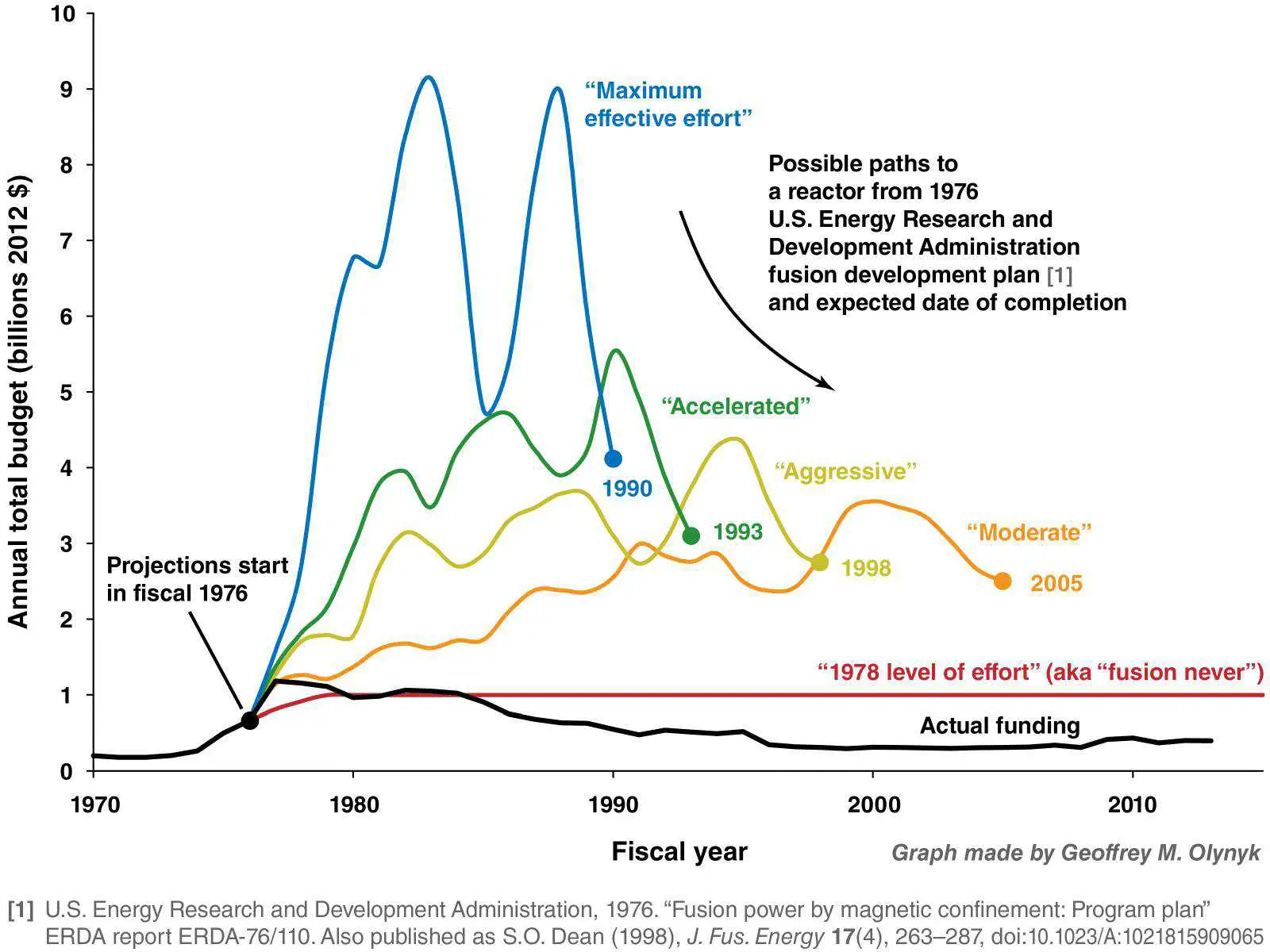
In its defence, that assumed it was properly funded. Its actual funding was very limited.
I believe most of the critical problems have been solved. The only major one left is keeping the reactor walls stable. They have a tendency to transmute, which causes multiple problems.
They are excellent in the hobby world. It’s generally when you need to do a bit of quick logic, an ESP32 can be dropped in to do it. E.g. change the colour of an led depending on a sensor.
They also form the core of a lot of IoT devices. Simple sensors and relays that can connect to WiFi and throw up a simple web interface. ESPhome, tasmota and WLED exist to make this extremely easy.
They are basically the hobbiest electronic multi tool. Powerful enough to do most jobs without bothering with code optimisation. Cheap enough to throw in and leave there.
The paradox of tolerance disappears when you look at it as a social contract. “I agree to tolerate your weirdness, that doesn’t significantly affect me, if you do the same in turn.” Add in “If you back me when someone breaks the contract, and I will back you in turn.” and you get a very good basis to build on. You end up with a few grey areas, but 95% is obvious.

Or you could realise you are in a group focused on a single bit of software and do a 5 minute investigation into said software.



It’s less based on the capacity, and more on how much time is likely a premium.
E.g. motorway services are more expensive, since people need the power and want to get back on the road. It’s exactly the same logic as the price of petrol there.